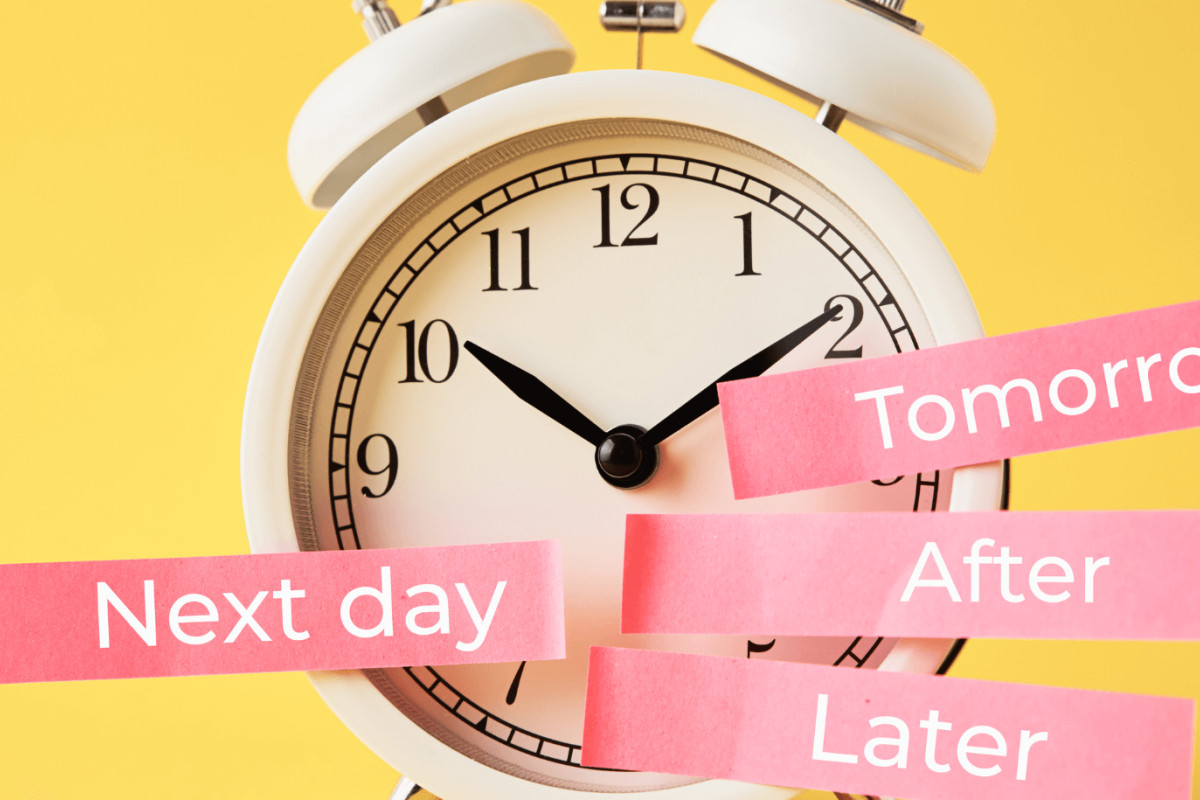
What is procrastination?
Procrastination is an active process; you choose to do something else instead of the task that you know you should be doing. Procrastination usually involves ignoring an unpleasant, but likely more important task, in favor of one that is more enjoyable or easier.
We all do it to some extent, put OFF for Tomorrow what we know should BE DONE Today.
Procrastinating can help you feel better in the moment, but it leads to demotivation, stress, it makes you feel guilty or ashamed sometimes. It can lead to reduced productivity and cause you to miss out on achieving your goals and what it dangerous about Procrastination is: It becomes a debilitating HABIT.
Procrastination reasons:
The ability to overcome procrastination and challenge the important actions that have the biggest positive and constructive impact in your life is a hallmark of the most successful people. So, if you regularly succumb to a myriad of excuses, habits, thoughts, and fears that are slowly but surely stealing your life and time away? It is a must to follow the steps below to help you Adopt Anti-Procrastination Strategies.
How to pound Procrastination? And overcoming the Habit of Delaying Important Tasks.
Reflection
As we go about our day, we are confronted with a variety of changing conditions and circumstances. Plus believing in the powerful role that emotions play in our life, every event, scenario, and/or person we face awakens within us an excess of emotions, and, it’s these emotions that can sometimes trigger cycles of procrastination.
Many of our painful emotional experiences manifest from our inability to handle our life circumstances in optimal ways. Unable to control these external events, we quickly succumb to painful emotions that dig us deeper into the depths of procrastination.
Stay aware and keep on remembering: One of the most powerful drivers of growth is through linking challenges to purpose and WHY to move forward.
When we’re sure about our outcome, we naturally find the motivation needed to persist and persevere while facing hardship and this provides us with a sense of confidence that things will work out in the end.
Do not allow any form of procrastination stopping you from creating the life you truly deserve and desire, move and make a step further towards your goals/ purpose, take the decisions, the actions that will shape your life yet always stay accountable for your faults and flexible with yourself.