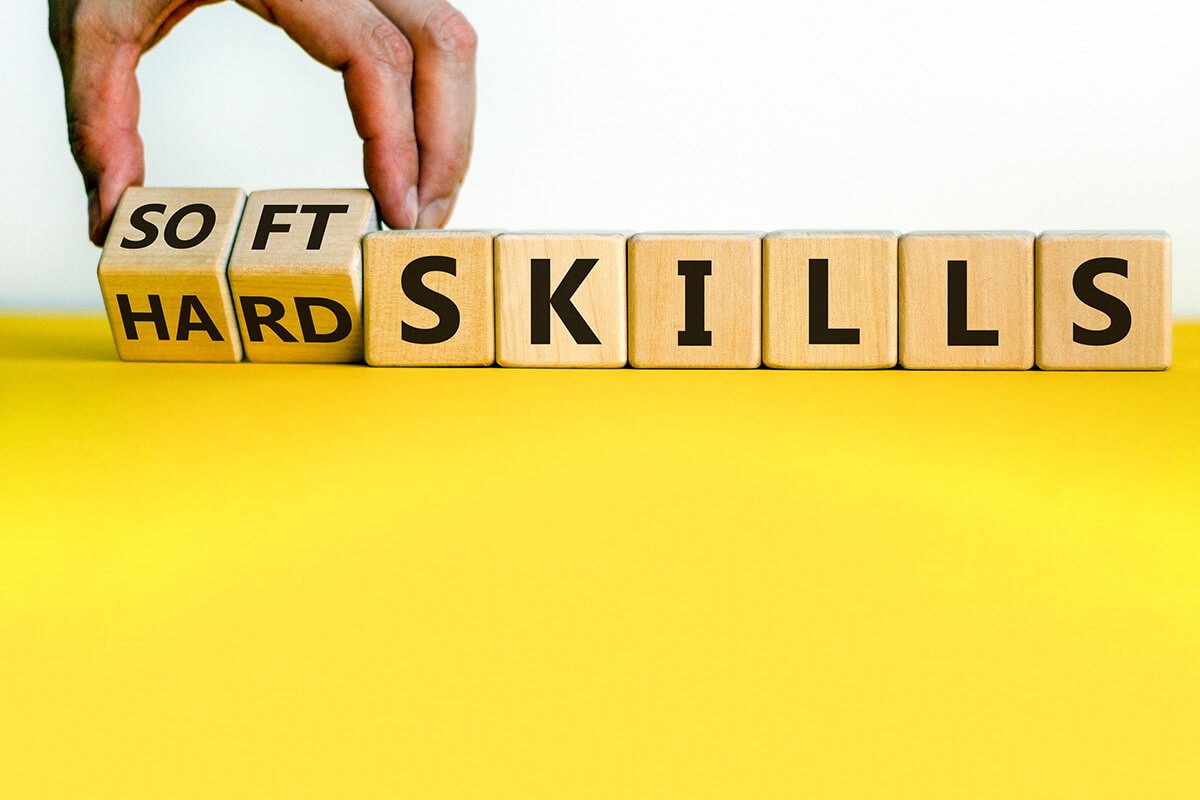
Skills mean performing a certain task or activity convincingly and correctly. On the professional level, skills are divided into two types: hard and soft. What is the difference between them?
Hard skills, also known as technical skills, are the set of skills that can be easily measured, and abilities that can be learned. These skills can be learned in the classroom, online, through training, through books, or even from the job.
Examples of hard skills:
Tools and equipment
Computer programming
Machines operation
Social media
Data entry
Photoshop
Hypertext Markup Language (HTML)
So where do you use your hard skills?
They can be used when repairing a car engine when using a computer program, when designing things, or when doing manual work.
Soft skills, also known as social skills or interpersonal skills, are skills that are difficult to measure. They are mainly related to people's personalities and the way they treat others.
Examples of soft skills:
Communication, which includes kindness, respect, listening, and others.
Leadership, which means the ability to manage a team and work with it to accomplish a specific task.
Teamwork, a skill that requires you to be a good listener and able to communicate with others.
Customer service, which requires being patient and calm, and knowing how to treat customers respectfully and positively.
Problem-solving, which is the ability to find successful solutions to problems, promptly.
Time management, which is the ability to use time productively, make use of it as much as possible and know how to organize it.
Attention to detail, a skill that allows you to improve your work and performance, means paying attention to the small details of any business or project.
Where do you use soft skills the most?
When for example, dealing with customers, doing a presentation, leading a team, or managing your time.
As a technical school student, you will use the hard skills more than the soft skills in your career path, but this doesn’t mean that you shouldn’t work on developing your soft skills, because they are as important as hard skills.
Here are the skills employers look for the most when hiring someone:
Analytical skills
Communication skills
Interpersonal skills
Leadership skills


Confidence is a state of mind not just a set of rules that can be learned....
Read more